
Why Flying Keeps Getting Safer: The Hidden System
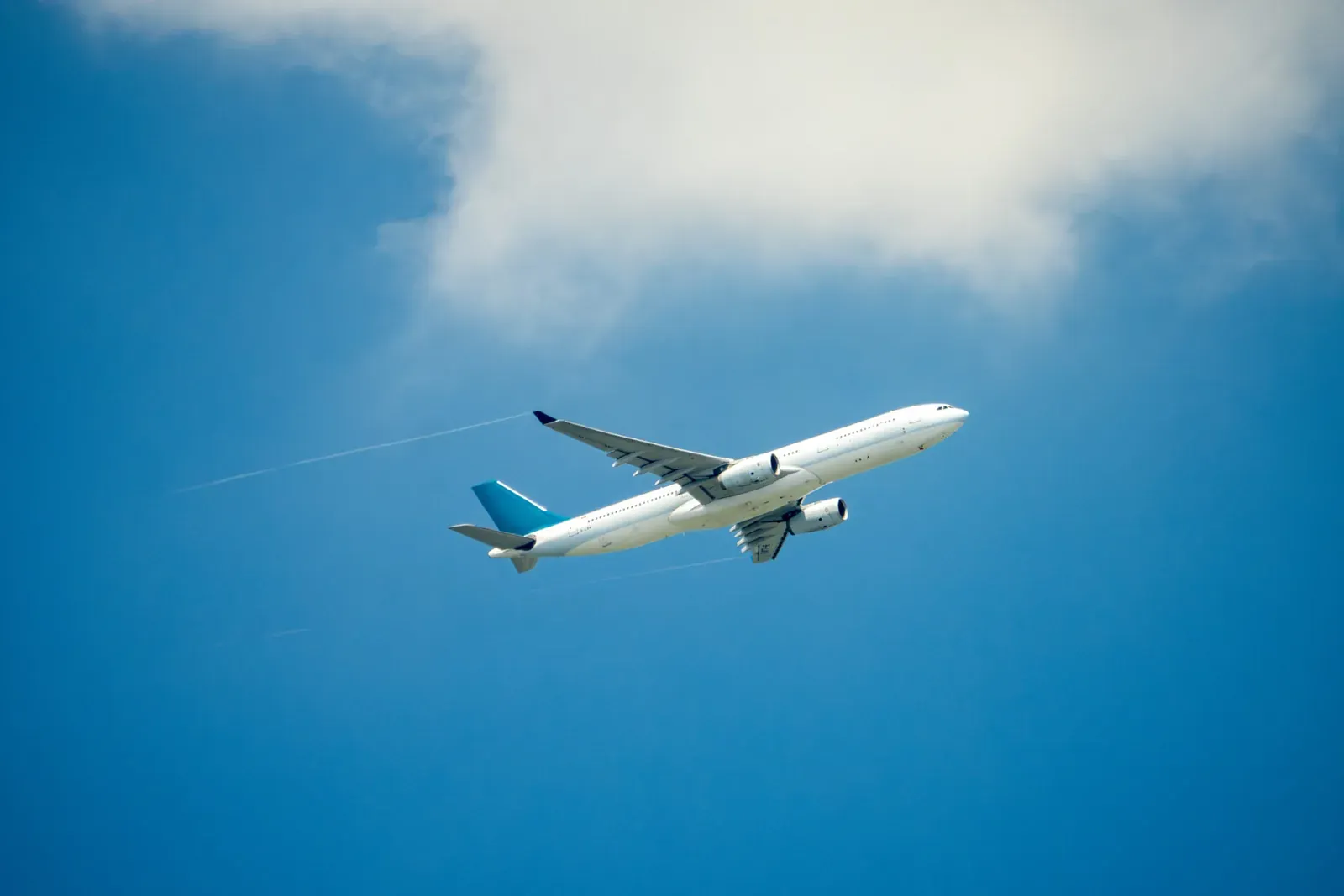
There’s a moment on every flight where the engines spool up, the plane leans back into the runway, and something in your gut tightens. Even people who fly all the time feel it. A small, ancient voice saying this is not natural, we should not be doing this.
Here’s the thing worth knowing before the wheels leave the ground. You are stepping into the safest system human beings have ever built. Not “pretty safe for a machine that flies.” The safest, full stop, of any way we’ve invented to move. And it didn’t get that way by luck, or because planes are simple. It got that way because aviation does something almost no other field does with disaster: it refuses to waste a single one.
Every rule is written in hindsight
Look at any rule in aviation and you can usually find the accident that wrote it. The safety card in the seat pocket, the way crew count the rows to the exits, the exact words a pilot is allowed to say on the radio. Each of these exists because at some point, something went wrong, people studied exactly how and why, and the answer became a rule that everyone flying afterward has to follow.
Take one of the hardest examples. In 1977, on a fog-choked runway on the island of Tenerife, two Boeing 747s collided on the ground. It remains the deadliest crash in aviation history; 583 people died, and not one of them was in the air. A big part of what went wrong came down to language. Ambiguous words on the radio, an assumption about a clearance that hadn’t been given, two crews unable to see each other in the fog.
That’s a horror, and it deserves to be named as one. But what the industry did next is the part most people never hear. Investigators pulled the disaster apart, working from wreckage, radio transcripts, and the flight recorders that don’t miss a word, and rebuilt the way pilots and controllers are allowed to talk to each other. Standard phrases. Clear readbacks, where you repeat an instruction so both sides know it landed. Specific words that can only mean one thing, so “cleared for takeoff” can never again be confused with “we’re getting ready.” Every time you hear a pilot read an instruction back word for word, you’re hearing Tenerife, still being answered decades later.
Ask why, not who
Now the counterintuitive heart of it, the idea the whole thing is built on.
When something terrible happens in most of life, the first instinct is to find who did it and punish them. Aviation does close to the opposite. When a plane crashes, the people whose entire job is to figure out why are deliberately walled off from the people who assign blame. Their mission is not justice. It’s information.
This isn’t an accident of culture. It’s written into the law of the sky. In 1951, the countries behind the Chicago Convention, the treaty that governs international civil aviation, adopted a document called Annex 13. It set out how air accidents should be investigated everywhere in the world, and its core principle is startling: the sole objective of an investigation is to prevent future accidents. Not to apportion blame. Not to find fault. To learn.
The reasoning is coldly practical. After a crash or a near miss, the most valuable thing in the world is the truth of what actually happened, and the people who hold that truth are the ones who were there. The pilot who made the call. The mechanic who signed off the part. The controller who was watching three planes at once. If those people believe that speaking honestly will end their career or land them in a courtroom, they go quiet. And the moment they go quiet, the lesson dies with the accident.
So aviation made a trade. In exchange for the truth, it mostly agreed not to use that truth to punish. An investigation asks why the system let a good person make a bad call, not who to hang it on. A near disaster, the kind that in another industry gets quietly buried, becomes a gift. Free data about a weakness nobody knew was there, handed over precisely because the person who found it wasn’t afraid to say so.
Catastrophe, turned into curriculum. And almost nobody outside the field ever thinks about it.
The fix is often the humans, not the machine
When you imagine making flying safer, you probably picture better engineering. Stronger metal, smarter computers, more redundant systems. Aviation did all of that. But some of the biggest leaps came from fixing something much harder than a machine: the way people behave in a cockpit.
For a long time, the captain was king. Senior, unquestioned, the final word. Which is fine until the captain is wrong and the only other person who can see it is a junior officer too intimidated to speak up. Investigators kept finding this pattern in the wreckage. A first officer who noticed the problem and said nothing, or said it so softly it didn’t land, because you did not challenge the captain.
The answer was a whole discipline called Crew Resource Management. It sounds like a corporate seminar. In practice it’s a rewiring of cockpit culture. It trains crews so that anyone, regardless of rank, can and must speak up when something looks wrong, and trains captains to listen when they do. The most important safety system on a modern airliner might be a copilot who feels free to say “I don’t like this.”
The technology showed up too. Ground proximity warning systems that shout at pilots when the terrain is rushing up have all but wiped out a whole category of accident, the kind where a working plane flies into a mountain nobody saw. Flight data monitoring quietly records thousands of ordinary flights and flags a worrying trend long before it becomes a headline. But the lesson underneath it all is that they fixed the culture, not just the hardware. They decided the humans were part of the system worth engineering.
How safe is “safe”?
Careful here, because this is where it’s easy to reach for a number that sounds precise and is actually wrong.
The shape of the story is not in doubt. Over the last several decades, flying has become dramatically, almost absurdly safer. Roughly four and a half billion people boarded flights in a recent year, and fatal accidents on major airlines have become so rare that a single one is world news for a week. By one estimate, the risk of dying on a given flight has fallen severalfold in a generation, to somewhere out past one in several million. Take any specific ratio with a grain of salt; they vary by who’s counting and how. But the direction is rock solid and worth sitting with. A mode of transport used by billions, where the bad year is measured against the safest year that came before it.
There is no other machine humans use at this scale that fails this rarely.
A machine that has to be maintained
It would be dishonest to end there, all triumph and no shadow. This system is not self sustaining. It’s a habit that has to be defended, and it’s under real pressure.
The blame free bargain only holds if everyone keeps it, and they don’t always. In some places prosecutors still reach for investigation findings to build a case, and every time that happens it teaches the next pilot or mechanic to stay quiet. Near misses still go unreported when people fear the penalty more than they trust the system. Reports get delayed when politics or courtrooms get involved. And the recent stretch of high profile incidents is a reminder that the graph doesn’t bend downward on its own. It bends because thousands of people keep choosing to feed the machine honest information, and keep protecting their right to do it.
Safety in the sky is not a state anyone reached. It’s a practice, renewed on every flight.
The safest place you’ll be all day
So come back to that moment on the runway, the tightening in your gut as the engines spool up.
The fear is telling you that you’re somewhere dangerous. It has it exactly backwards. You are strapped into the most obsessively examined machine in human history, flown by people trained to speak up and taught to listen, moving through a system that spent a century treating every disaster not as something to bury but as something to learn from. Every rule keeping you level was paid for once, and the whole point of paying was to never pay it again.
That’s the wonder. Not that flying is safe, but how it got that way. A machine built out of a hundred years of refusing to waste a single lesson, quietly carrying you home.
Read next
What Causes Turbulence, and Why It Won't Bring a Plane Down
What causes turbulence on a plane, the handful of things that stir up the air, and the honest reason it's a comfort issue rather than a threat to the aircraft.
Incidents & SafetyThe Safest Seat on a Plane, According to the Data
The safest seat on a plane, according to decades of crash data, and the honest reason it matters far less than you'd think.
Incidents & SafetyThe Black Box Isn't Black (and It Isn't One Box)
Why is the black box orange, what does the black box record, and who invented it? The answer is a moving story most people never hear.
Liked this?
Get the next one in your inbox. Aviation explained for the people who never lost the wonder. One email, no noise.